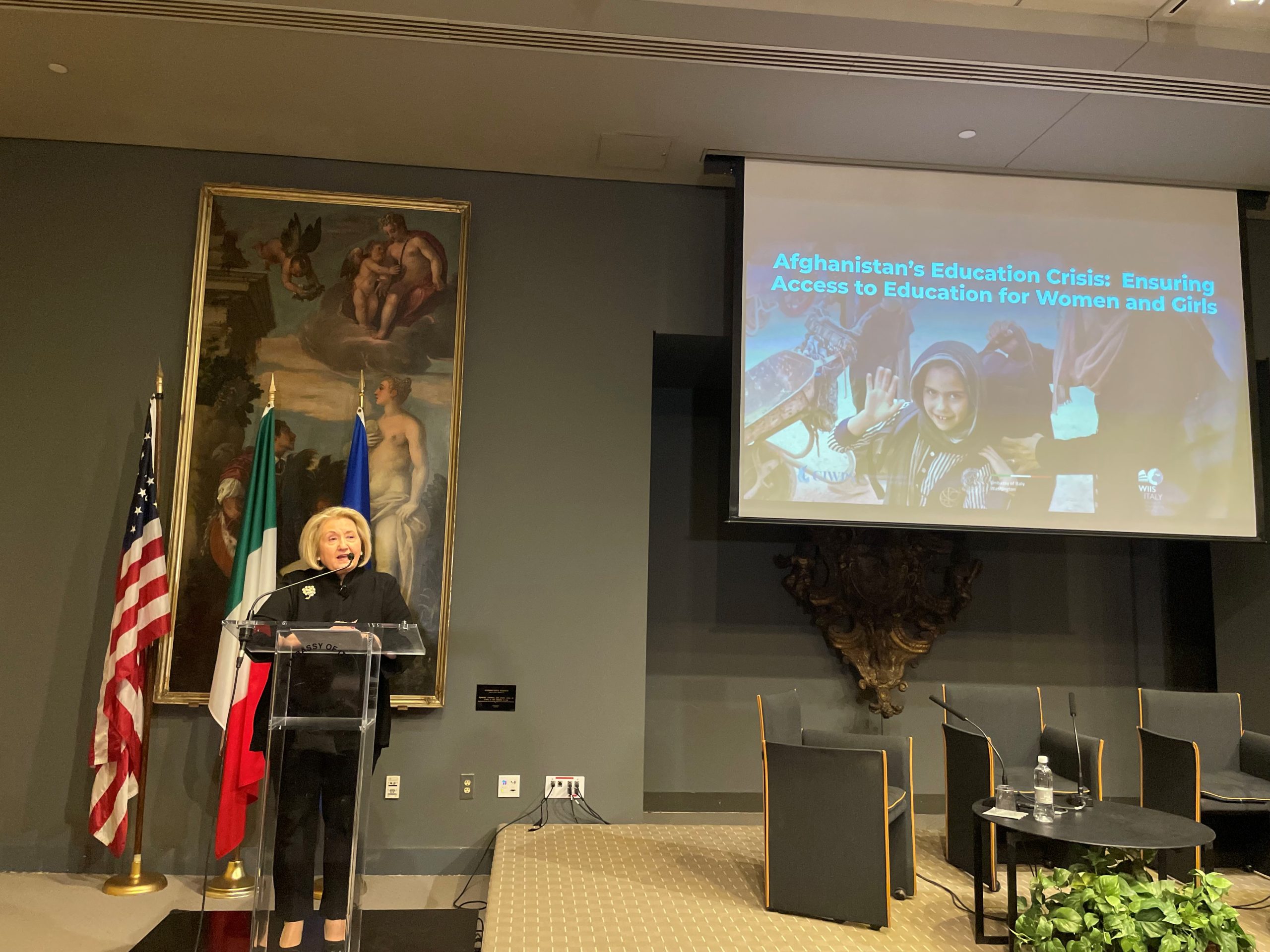
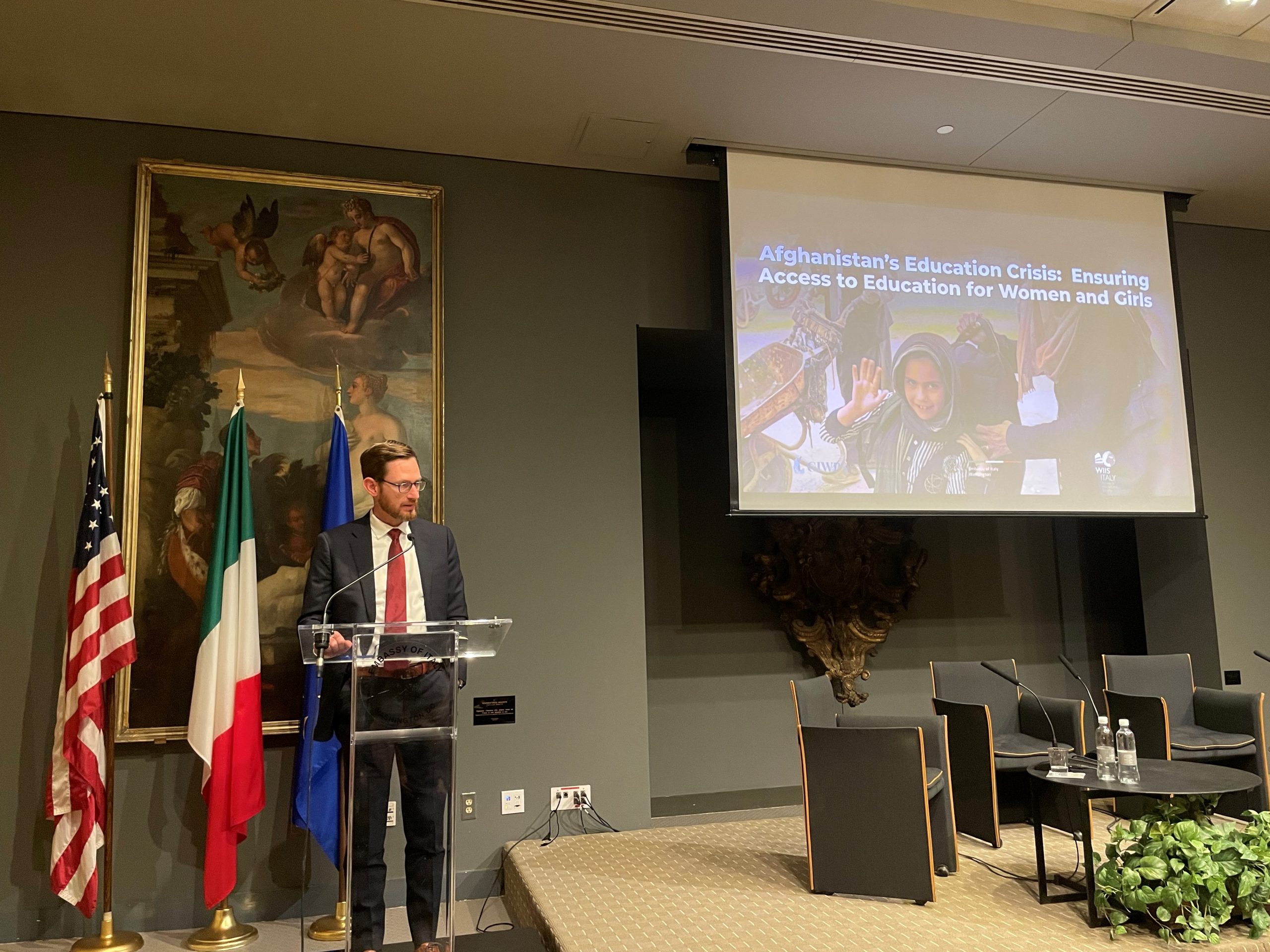
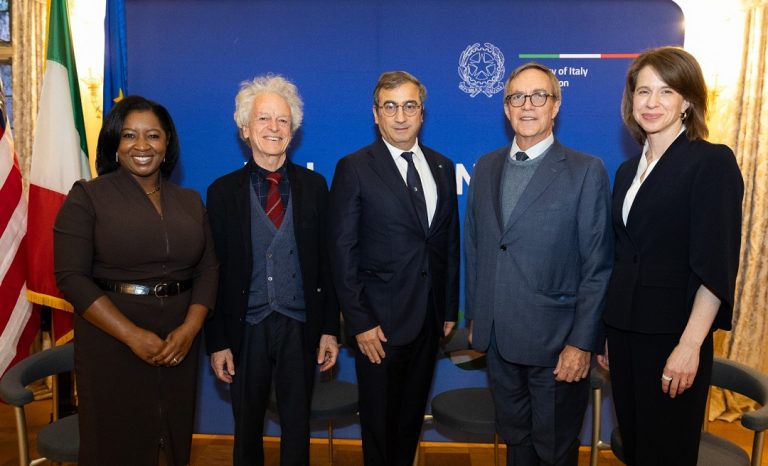
A year after confirmation of the closure of secondary schools for Afghan girls, the Embassy of Italy in Washington, as part of Women’s History Month in the United States, hosted the event “Afghanistan’s Education Crisis: Ensuring Access to Education for Women and Girls” yesterday, organized in collaboration with Georgetown University’s Institute for Women, Peace and Security (GIWPS) and Women in International Security-Italy (WIIS).
“Without the participation of women, Afghan society is poorer and its economy weaker. Depriving Afghanistan of the contribution of women is not only wrong but counterproductive”, said Italian Ambassador Mariangela Zappia. The Ambassador highlighted the seriousness of the prohibitions imposed by the Taliban and the courage of Afghan women – who also in recent days took to the streets to protest against the regime – and Italy’s leading role in promoting the rights of Afghan women and girls.
The event highlighted the need to continue to keep the international community’s attention on the situation of women in Afghanistan and on the fundamental right of Afghan girls to have access to education.
U.S. Special Envoy for Afghan Women, Girls, and Human Rights, Rina Amiri, stressed that the tragedy of denied access to education for Afghan girls and women is entirely the “fruit of the Taliban’s ideology and not derived from Islam or Afghan culture, as the Taliban assert”. “The Afghanistan of the Taliban is the only country in the world where women and girls are deprived of education because of their gender”, stressed Melanne Verveer, GIWPS Director and moderator of the two discussion panels into which the event was structured. Palwasha Hassan (GIWPS), Sara Wahedi, creator of the app Ehtesab (accountability), and Jo Bourne (Global Partnership for Education) participated in the first panel, aimed at identifying barriers, critical areas, and innovative solutions. During the second panel, dedicated to international cooperation in order to facilitate access to education for Afghan women and girls, Ambassador Adela Raz, the first woman Afghan Permanent Representative to the United Nations and former Ambassador to the United States, Habiba Sarabi, former Afghan Minister of Women’s Affairs, and Loredana Teodorescu, President of WIIS Italy, spoke.
Richard Bennett, UN Special Rapporteur on the situation of human rights in Afghanistan, also spoke at the event, insisting on the need for an approach that integrates all existing initiatives on the subject.
At the event’s conclusion, U.S. Special Representative for Afghanistan Tom West highlighted how access to education for women in Afghanistan is a priority for the U.S. Government because “it is not just a question of human rights but a theme at the foundations of the stability of a country at the center of an increasingly unstable region”. Summarizing the event’s outcome, the Italian Foreign Ministry’s Special Envoy for Afghanistan, Gianfranco Petruzzella, noted the widespread sense of urgency in the international community on the issue, resulting from the “seriousness of the wound inflicted by the Taliban on their country by the denial of the right to education for women”.